Carabao Diving Team
SSI Dive Professionals
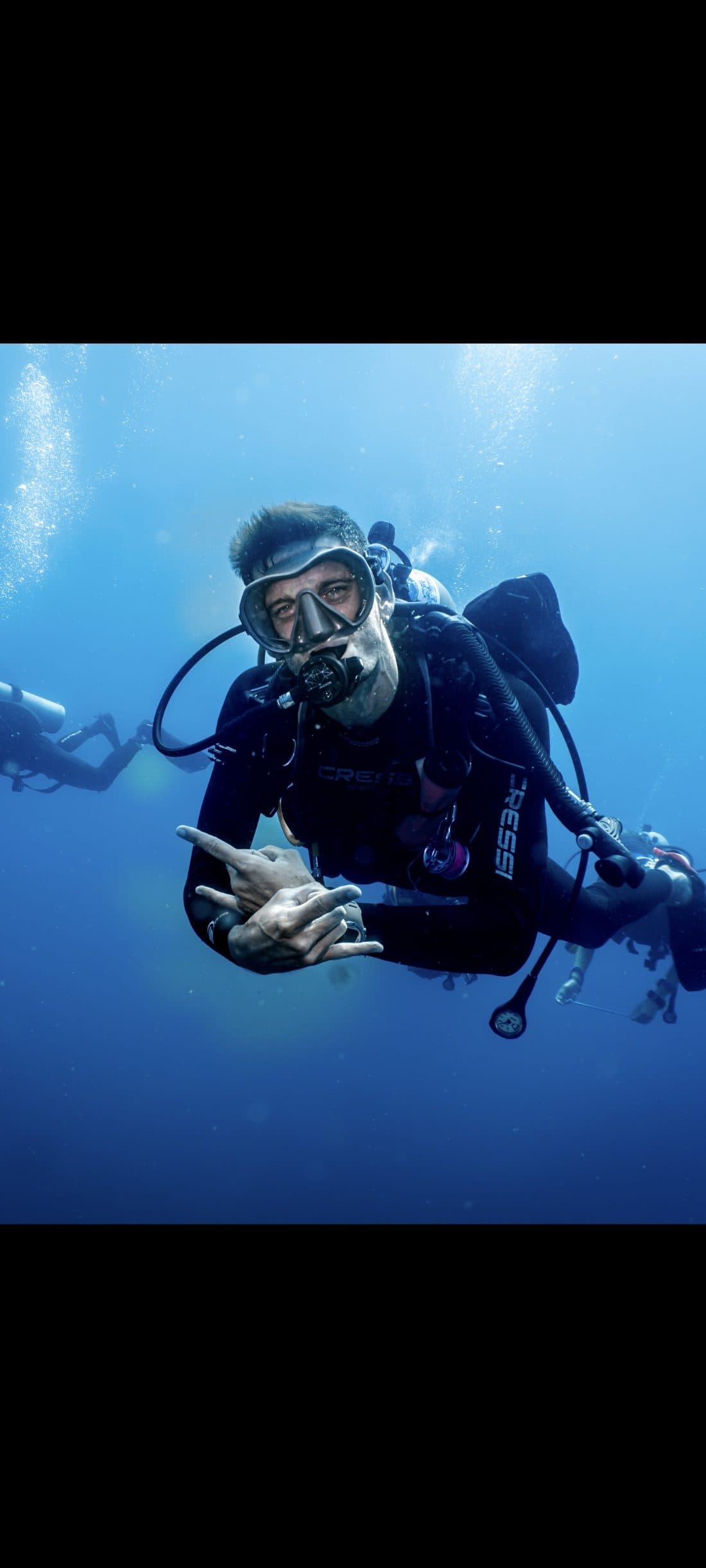
The Carabao Diving team — a group of SSI-certified dive professionals who live and dive Koh Tao year-round. Our instructors collectively have thousands of dives around the island.
Published
February 10, 2026
Updated
May 5, 2026
8 min read
Night diving in Koh Tao is a completely different ocean — octopus hunting, sleeping parrotfish, bioluminescence in the dark water. Here's what to expect and how to do your first night dive safely.
Night diving is consistently one of the most requested experiences from divers who come to Koh Tao — and one of the most transformative. The reef you've been diving all week in bright daylight becomes an entirely different place after dark. The fish that hide in crevices during the day are out hunting. The nocturnal creatures that are invisible in daylight emerge. And in the right conditions, you move your hand through the water and leave a trail of cold blue bioluminescent fire behind it.
If you've only dived during the day, you haven't seen half the ocean. This guide covers everything you need to know about night diving in Koh Tao — the marine life, the equipment, the safety considerations, the best sites, and how to do your first night dive.
What's Different About Diving at Night?
The fundamental difference is your field of view. During the day, you can see 15–20 metres in every direction. At night, your world narrows to whatever your torch beam illuminates — typically a cone of perhaps 2–3 metres. Everything beyond that is black. This sounds intimidating before your first night dive. In practice, most divers find it creates an intense sense of focus: you see exactly what you're pointing your light at, in extraordinary detail, without the visual noise of a busy daytime reef.
Marine life behavior changes dramatically after dark. Predator species become more active. Fish that were swimming freely during the day are now wedged into coral crevices, sleeping. The herbivores that grazed the reef in daylight have retreated, and the hunters — moray eels, octopus, lionfish — have taken their place. The entire dynamic of the reef shifts, and what you encounter is almost always different from what you'd see on the same site in the morning.
Marine Life You Only See at Night
Octopus on the Hunt
Octopus are rarely spotted on daytime dives in Koh Tao — they're masters of camouflage and spend much of the day hidden. At night, they come out actively hunting crabs and small fish across the reef. Your torch beam will often reveal one mid-crawl, arms extended, colour-shifting in real time as it processes this new source of light. It's one of the most captivating night dive encounters you can have. The speed at which they change colour and texture — from sandy beige to mottled brown to deep red in seconds — is genuinely startling in person.
Sleeping Parrotfish in Their Mucus Cocoons
Parrotfish are one of the reef's most vibrant daytime species — always moving, always grazing hard coral. At night, they retreat to a crevice or ledge and secrete a transparent mucus cocoon around themselves before sleeping. The cocoon is thought to mask their scent from predators. When you spot one — puffed out, barely visible inside its protective bubble — it looks almost like a fish in a soap film bag. It's one of those night dive sights that most divers find simultaneously bizarre and wonderful.
Moray Eels Out Hunting
Moray eels are present during daytime dives, typically peering from holes in the reef with their mouths rhythmically opening and closing (this is how they breathe, not a threat display). At night, they leave the reef entirely and hunt freely across open sandy areas and rubble zones. Encountering a fully extended 1.5-metre moray eel patrolling the open bottom of Japanese Gardens at night is a very different experience from seeing one coiled in a crack at 15m. They move with surprising speed and purposefulness.
Lobsters and Crustaceans
Spiny lobsters are almost never seen during the day — they stay deep in the reef structure. At night, they venture out to feed and are regularly spotted picking their way across the sandy bottom. Similarly, banded coral shrimps, mantis shrimps, and various crab species that are daytime hiders become accessible to observe after dark. A single night dive can produce 10–15 crustacean sightings that you wouldn't get in a week of daytime diving.
Bioluminescence
On dark nights with no moon, plankton in the water column can bioluminesce — a phenomenon where microscopic organisms produce cold blue-green light when disturbed. If you switch your torch off on such a night and wave your hand through the water, you'll leave a trail of glowing blue light behind it. Moving your fins creates spiraling streaks. At full intensity, the water around you glitters with points of light like a slow-motion galaxy. Not every night dive produces this — it depends on plankton density and lunar phase — but when it happens, it's one of the most extraordinary sensory experiences diving offers.
Spanish Dancers and Nudibranchs
The Spanish Dancer — Hexabranchus sanguineus — is a large, flame-red nudibranch (shell-less sea slug) that is almost exclusively active at night. When swimming, it undulates its body in a movement that genuinely resembles a dancer's skirt, which is where the name comes from. They grow up to 60cm and are one of the most visually striking creatures on any reef. Night diving in Koh Tao produces regular Spanish Dancer sightings, particularly around Chalok Bay and Japanese Gardens.
Best Night Dive Sites in Koh Tao
Japanese Gardens — Best for First Night Dives
Japanese Gardens is our default recommendation for first-time night divers. The site is in a sheltered bay on the north side of Koh Tao, which means entry and exit conditions are calm even in mild swell. The maximum depth of 14m provides a comfortable margin. The sandy bottom and branching coral structure make navigation relatively straightforward, and the site has excellent macro life — octopus, sleeping parrotfish, lobster, and shrimp are reliable sightings. If bioluminescence is going to be present on a given night, Japanese Gardens typically shows it.
Twins
Twins at night transforms the familiar daytime site into something more mysterious. The blue-spotted ribbontail rays that frequent the sandy channel between the two reef structures become more active after dark. Moray eels work the sand for crabs. The hard coral heads that seem static in daylight reveal sleeping fish tucked into every available cavity. For divers who have done their first night dive at Japanese Gardens, Twins is an excellent second step — slightly deeper and more complex, with different marine life.
Chalok Bay
Chalok Bay on the south side of the island offers some of Koh Tao's best night diving for experienced divers comfortable with darker conditions. The bay has significant macro diversity — nudibranchs, frogfish, ghost pipefish, and mantis shrimps are all present — and the wider sandy areas make for productive hunting ground observation. Spanish Dancer sightings here are more frequent than at most other Koh Tao sites.
Equipment for Night Diving
- Primary torch (dive light): Your main light source. Minimum 1,000 lumens recommended. At Carabao, we provide primary torches as part of the night dive equipment package
- Backup torch: A must. Night diving without a backup torch is a safety issue — if your primary fails, you need to be able to signal your buddy and navigate to the exit
- Tank light: A chemical light stick or LED light attached to your tank valve so your buddy can see you from behind. Standard safety kit for every night dive
- Surface marker buoy (SMB): Critical for ascents — at night, you need to be visible to the boat and to surface traffic when you surface
- Dive computer: As always — but at night, you rely on it even more since natural light cues for depth perception are absent
- Wetsuit: Same as daytime, but worth noting that Koh Tao's water temperature drops slightly after dark, especially in the January–March period. A full 3mm suit is comfortable year-round
Night Dive Safety: What You Need to Know
Night diving is safe when approached correctly. The risk profile is higher than daytime diving primarily because visibility is reduced, navigation is more demanding, and communication between divers requires more deliberate effort. These risks are managed with straightforward procedures.
- Stay with your buddy — the buddy system is always important in diving, but at night it's critical. At night, never be more than 2 metres from your dive buddy. If you separate, surface immediately
- Pre-dive briefing matters more at night — know the entry and exit points, the dive plan, the maximum depth, the signal patterns for torch communication, and what to do if someone loses their light
- Torch signals for buddy communication: pointing torch down and circling means OK; rapid side-to-side sweep means attention needed; direct illumination of a fellow diver means stop or look here
- Do not shine your torch directly into another diver's face — it destroys their night vision and can disorient them
- Slow down — navigation and situational awareness take more concentration at night. There's no rush
- Surface with a lit SMB deployed — always
Important
Never dive at night without a backup torch. If your primary torch fails in the water, a backup torch is what allows you to surface safely and signal your buddy. This is non-negotiable at any night dive site.
Navigation at Night
Underwater navigation becomes more deliberate and more important at night. Before your dive, you'll receive a compass bearing for the entry and exit route. During the dive, you use a combination of compass headings, natural landmarks (the shape of the reef, the slope of the sand, the direction of the current), and awareness of where your torch beam has been to maintain orientation.
The most common navigation mistake at night is tunnel vision — focusing so intensely on the creature in front of your torch that you stop tracking where you are. Experienced night divers develop the habit of regularly pausing to take a compass reference and check the orientation of the reef structure around them. It becomes automatic. Your DM or instructor will track the group's position and ensure everyone returns to the exit point correctly.
How to Do Your First Night Dive in Koh Tao
There are two main ways to experience a night dive in Koh Tao: as part of the SSI Advanced Adventurer course, or as a standalone fun dive for already-certified divers.
As Part of the Advanced Adventurer Course
The SSI Advanced Adventurer course requires 5 adventure dives, and the night dive is one of them. This is often the first night dive most divers do — it's structured, supervised closely by an instructor, and conducted as part of a broader learning programme that also includes a deep dive, navigation dive, and two more of your choosing. If you haven't yet done your Advanced, doing a night dive as part of that course is the most logical and cost-effective way to experience it.
As a Standalone Fun Night Dive
Certified divers (Open Water or above) can join us for standalone night fun dives. We typically depart at sunset, conduct a surface briefing, and are in the water by full dark — which in Koh Tao is around 7:00–7:30 PM. The dive lasts 45–60 minutes. Cost is 1,500–1,800 THB and includes a torch. Maximum group size applies as always.
What It Actually Feels Like
No description quite prepares you for the first moment of a night dive. You roll off the boat and the surface is dark — moon or no moon, the island lights in the distance, the sound of the water and your breathing. You descend. The torch beam cuts a sharp cone through black water. Five metres down, the reef materializes in front of you — coral that you've seen a dozen times in daylight, but it looks different now: more vivid, more textured, lit from one direction only like a photograph rather than the soft even light of day.
Then, on a good night, a giant octopus extends an arm toward your light. Not away — toward it, with the tentative, curious reach of an animal checking out something new. You hover, completely still. It considers you. Then it flows back into the reef, colour-shifting as it goes, and disappears. You've been in the water for four minutes.
After the first night dive, most divers want to do another one immediately. The experience of the reef after dark has no real daytime equivalent. It's the same ocean with entirely different rules.
Book a Night Dive or Advanced Course in Koh Tao
Add a night dive to your Koh Tao itinerary — either as a standalone fun dive for certified divers, or as part of the SSI Advanced Adventurer course.
View Advanced Course❓Frequently Asked Questions
Yes, when conducted with proper preparation and a qualified dive guide. Night diving requires additional planning — pre-dive briefing on torch signals and buddy protocol, backup torch as mandatory equipment, and a surface marker for ascent. At Carabao, we brief all divers thoroughly before every night dive and keep group sizes small. The sites we use for night dives are chosen for their calm conditions and straightforward navigation.
🎓SSI Certified Instructors · Max 4 Students
Ready to Get Your Diving Certification?
SSI Open Water, Advanced Adventurer, Rescue Diver and more — taught in small groups with beach departure from Sairee, Koh Tao.
You Might Also Like
Best Dive Sites in Koh Tao: A Local's Guide to Every Site Worth Diving
Open Water Course in Koh Tao: The Complete Guide (What to Expect, Day by Day)