Matteo Terranini
Dive Director & Co-founder
SSI Instructor Trainer with 15+ years diving the waters of Koh Tao. Matteo has personally logged over 4,000 dives around the island and manages daily dive operations at Carabao Diving.
Published
April 1, 2025
Updated
May 9, 2026
10 min read
Thinking about diving in Koh Tao for the first time? Here's everything the dive shop websites won't say — from what the water actually feels like to how to pick the right course and avoid the most common beginner mistakes.
Every month, hundreds of people arrive in Koh Tao having never put their face underwater with a tank on their back. Most of them leave with a certification, a few stories, and a new addiction. Some of them leave disappointed — not because they're not cut out for diving, but because they made avoidable mistakes before they even got in the water.
I've been teaching diving in Koh Tao for over 15 years. I've seen every version of the beginner experience. This is the article I wish existed when I started teaching — the honest version that the marketing pages skip.
Do You Need Any Experience to Dive in Koh Tao?
No. Zero. You don't need to be a strong swimmer, an athlete, or even particularly comfortable in the ocean. Scuba diving is one of the few activities where the equipment does most of the work. Buoyancy is controlled by your BCD (buoyancy vest), breathing is effortless through the regulator, and the instructor is right next to you the entire time.
What helps: being comfortable putting your face in water, being able to swim 200 metres at your own pace, and not having serious heart or lung conditions. That's genuinely the full list of prerequisites for a beginner course.
Pro Tip
If you're unsure whether you're fit to dive, just tell the dive shop honestly. Any reputable instructor will walk you through a simple check — nobody wants to put you in the water if it's not right for you.
Try Scuba vs Open Water Course: Which One Should You Book?
This is the most important decision you'll make. Here's the honest breakdown:
| Try Scuba (Discover Scuba) | SSI Open Water Course | |
|---|---|---|
| Duration | 2–3 hours | 3–4 days |
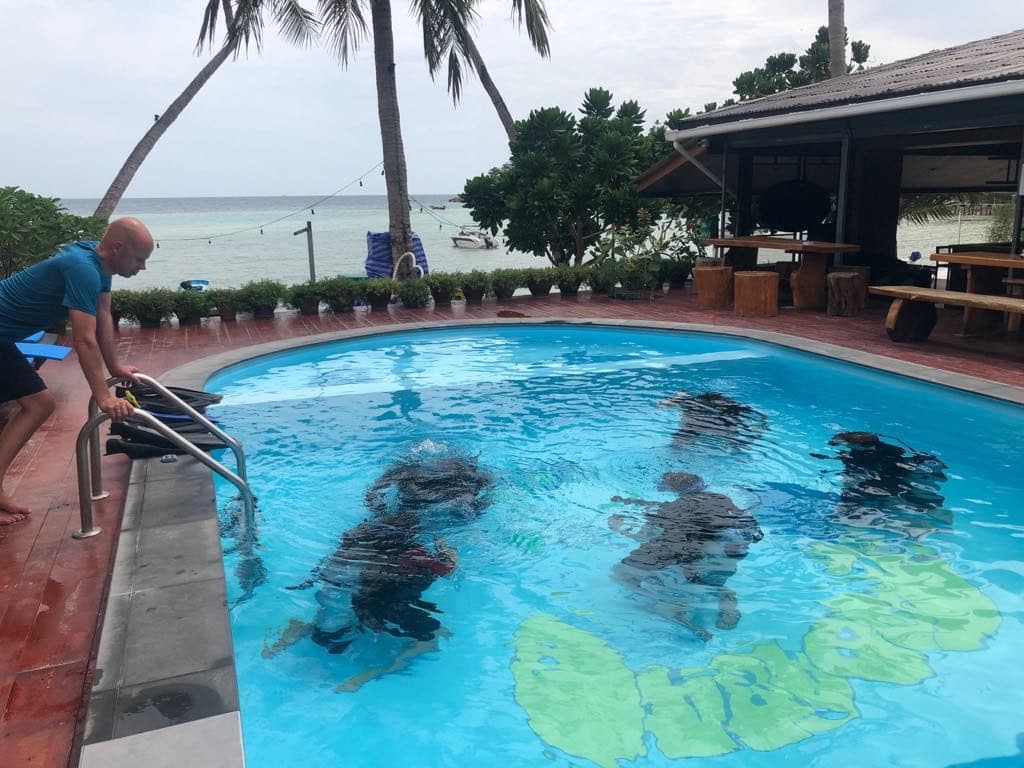
| Dives | 1–2 shallow dives | 4 open water dives + pool |
| Depth limit | 12 metres max | 18 metres certified |
| Result | Experience only | Lifetime certification |
| Best for | Curious first-timers | Anyone who wants to keep diving |
The try scuba option is perfect if you genuinely don't know whether you'll like it. But if there's even a 60% chance you'll want to dive again after Koh Tao — book the Open Water. The try scuba fee does not count toward certification later, so you'll end up paying twice.
Try Scuba or Get Certified — Which Is Right for You?
Small groups, beach departure, SSI instructors. We'll help you pick the right option before you book.
View Courses & PricingWhat the Water Actually Feels Like (Honest)
Koh Tao's water sits between 28°C and 30°C for most of the year. You'll wear a 3mm wetsuit which keeps you comfortable for a full hour underwater without ever feeling cold. Visibility ranges from 10 to 25+ metres depending on the season — on a clear day, you can see the bottom from the boat.
The feeling of breathing underwater is strange for the first 30 seconds. Your brain expects it to be hard and it isn't — air comes freely and easily with every breath. Most beginners relax within a minute. By the second dive, it feels completely natural.
What surprises people most: the silence. Once you're a few metres down, the noise of the surface disappears completely. It's just you, your breathing, and the reef.
The 5 Most Common Beginner Mistakes (And How to Avoid Them)
1. Booking on the day
Koh Tao's best dive schools fill up fast, especially December through March and July through August. Showing up without a booking and expecting a spot the same morning is a gamble. Book at least 24–48 hours in advance. If you're visiting during peak season, book before you arrive on the island.
2. Choosing on price alone
There are 40+ dive schools in Koh Tao. Some compete on price by cutting corners on group size, equipment maintenance, or instructor ratios. A ฿500 difference in course price is irrelevant if you end up in a group of 8 beginners with one instructor. Ask: how many students per instructor? What's the maximum group size? Those numbers tell you more than the price.
3. Flying too soon after diving
After diving, nitrogen builds up in your bloodstream. Flying too soon can cause decompression sickness — a serious condition. The standard rule: wait at least 18 hours after a single dive day before flying. After multiple dive days, wait 24 hours minimum. Plan your Koh Tao departure accordingly.
Important
Do not fly within 18 hours of your last dive. This is a medical rule, not a suggestion. If you have a morning flight, your last dive should be the afternoon before — or earlier.
4. Severe sunburn before diving
Koh Tao sun is brutal. Arriving on Monday, spending the whole day on the beach without protection, and turning up sunburned on Tuesday is extremely common — and miserable. A wetsuit over sunburned skin is genuinely painful. Get a rash guard, use reef-safe SPF, and protect your shoulders especially.
5. Rushing through the theory
The theory portion of your Open Water course exists for a reason. The dive tables, pressure concepts, and emergency procedures are what keeps you safe. Students who skim the theory consistently struggle more in the pool and the ocean. One afternoon with the SSI app before you arrive in Koh Tao makes a genuine difference.
What to Bring to Your First Dive
- Swimsuit you're happy to wear under a wetsuit
- Towel
- Reef-safe sunscreen applied before you leave your accommodation
- Water bottle — diving dehydrates you more than expected
- Seasickness tablet if you're sensitive to boats (take 30 mins before departure)
- Snacks for between dives
- Dry bag or waterproof case for your phone if you want photos topside
Pro Tip
Leave valuables at your accommodation. The dive boat has no secure storage, and salt water ruins electronics instantly.
What You'll Actually See on Your First Dive
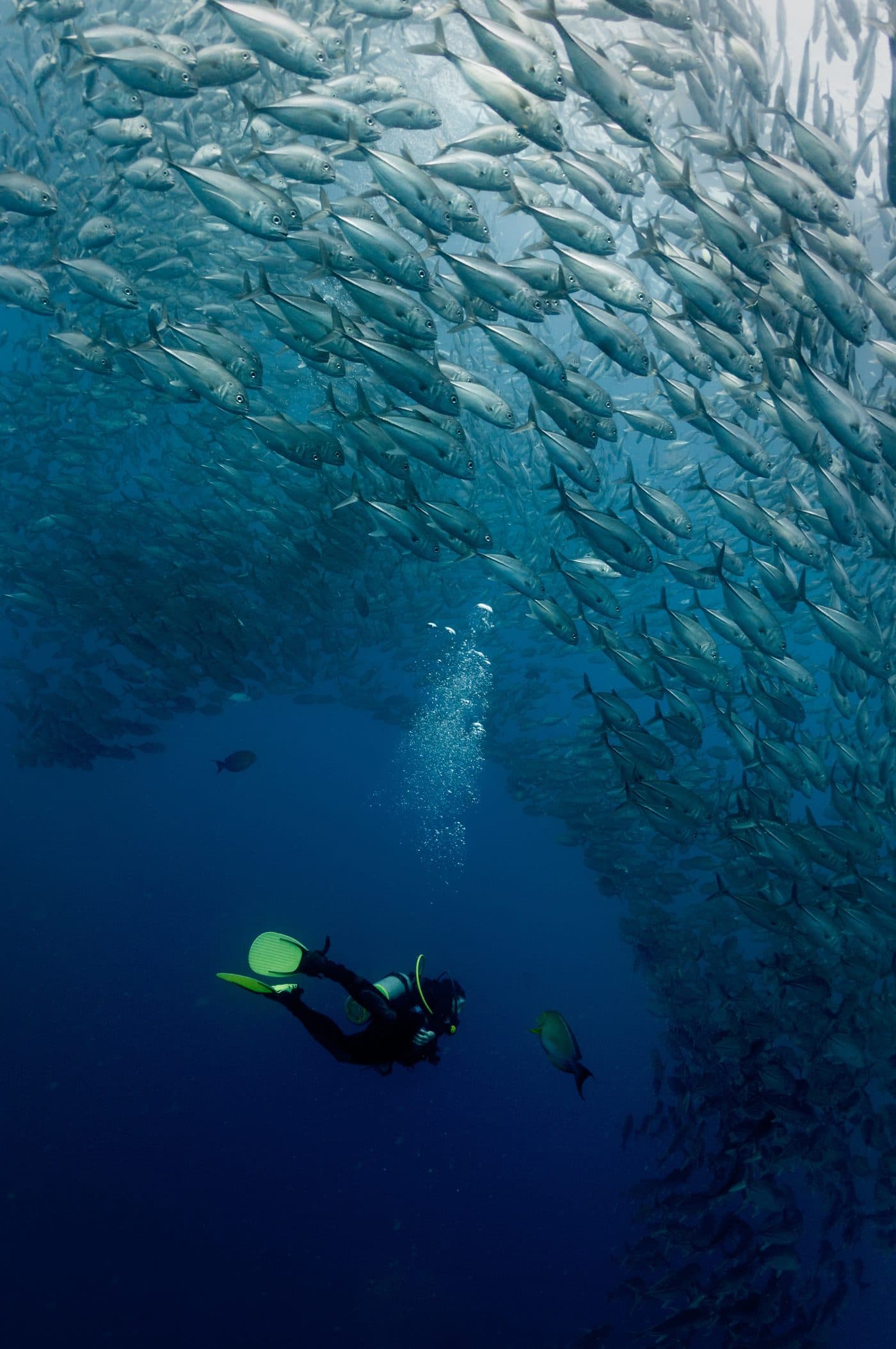
Koh Tao is one of the best beginner dive destinations in the world — not because of marketing, but because of what's actually here. Your first dive will most likely be at a sheltered site like Koh Nang Yuan or Japanese Gardens. Expect: sergeant fish, parrotfish, lionfish, pufferfish, moray eels, and almost certainly a sea turtle.
First-time divers regularly see things that experienced divers in other parts of the world wait years for. The turtle population around Koh Tao is healthy and remarkably tolerant of calm, respectful divers. If you stay neutrally buoyant and don't chase them, they'll often swim right past your mask.
Why Koh Tao Is the Best Place in the World to Learn to Dive
Three reasons: conditions, expertise, and cost. The water is warm, calm, and clear for most of the year — ideal for learning. Koh Tao trains more divers per square kilometre than almost anywhere on earth, which means the instructors here have seen every type of student. And the cost of a full Open Water certification is a fraction of what you'd pay in Europe, Australia, or the Caribbean.
I've dived in 30+ countries. I still live and dive here. That should tell you something.
Ready to Start Diving in Koh Tao?
Send us a message on WhatsApp — we answer within minutes and can help you choose the right course for your timeline and experience level.
Chat on WhatsApp❓Frequently Asked Questions
Yes, as long as you can swim 200 metres at your own pace and float for 10 minutes. You don't need to be fast or technically skilled. The equipment does most of the work — buoyancy in scuba is controlled by your vest, not your swimming ability.
🎓SSI Certified Instructors · Max 4 Students
Ready to Get Your Diving Certification?
SSI Open Water, Advanced Adventurer, Rescue Diver and more — taught in small groups with beach departure from Sairee, Koh Tao.
You Might Also Like
Open Water Course in Koh Tao: The Complete Guide (What to Expect, Day by Day)
SSI vs PADI in Koh Tao: Which Certification Is Right for You?